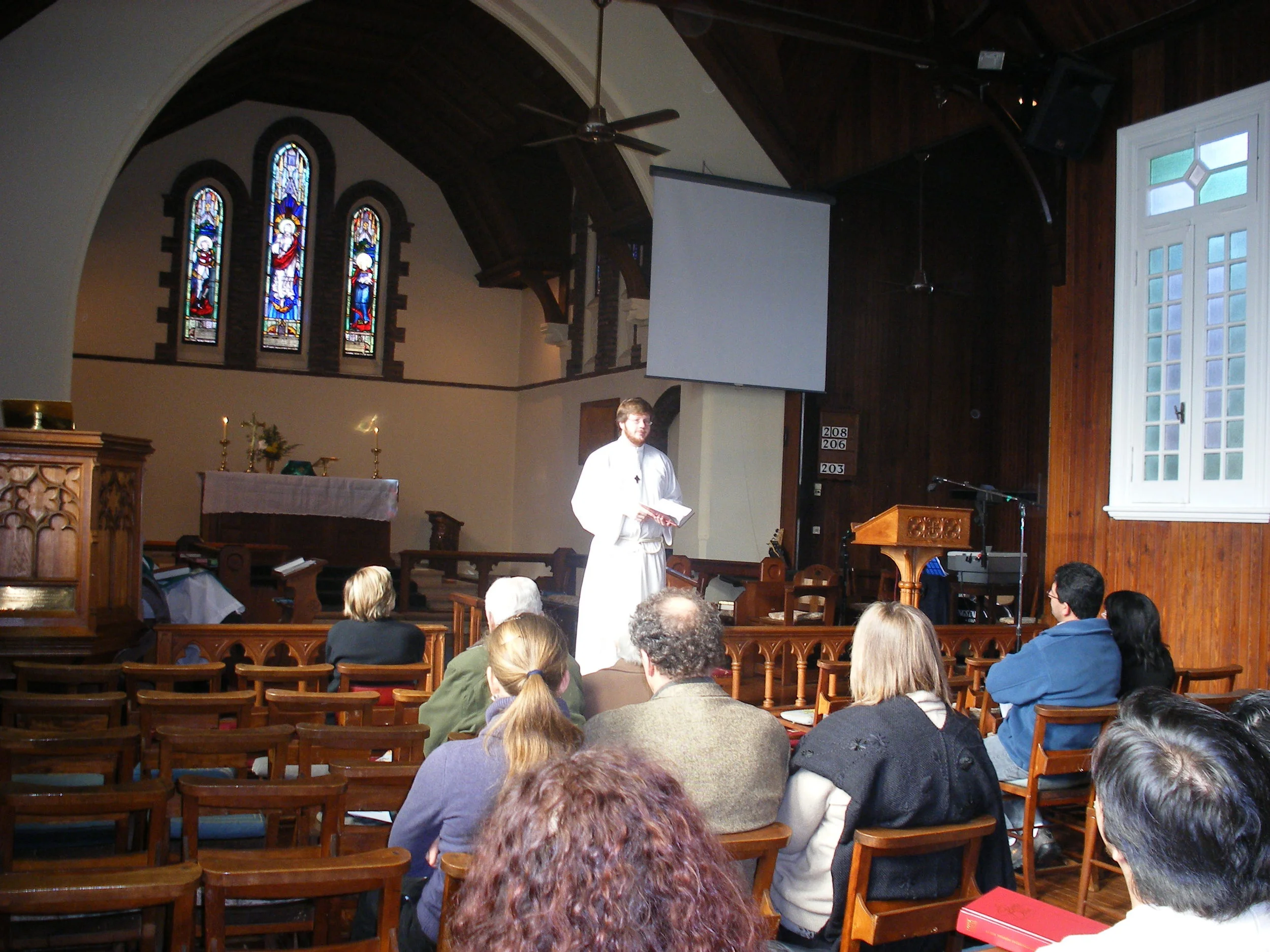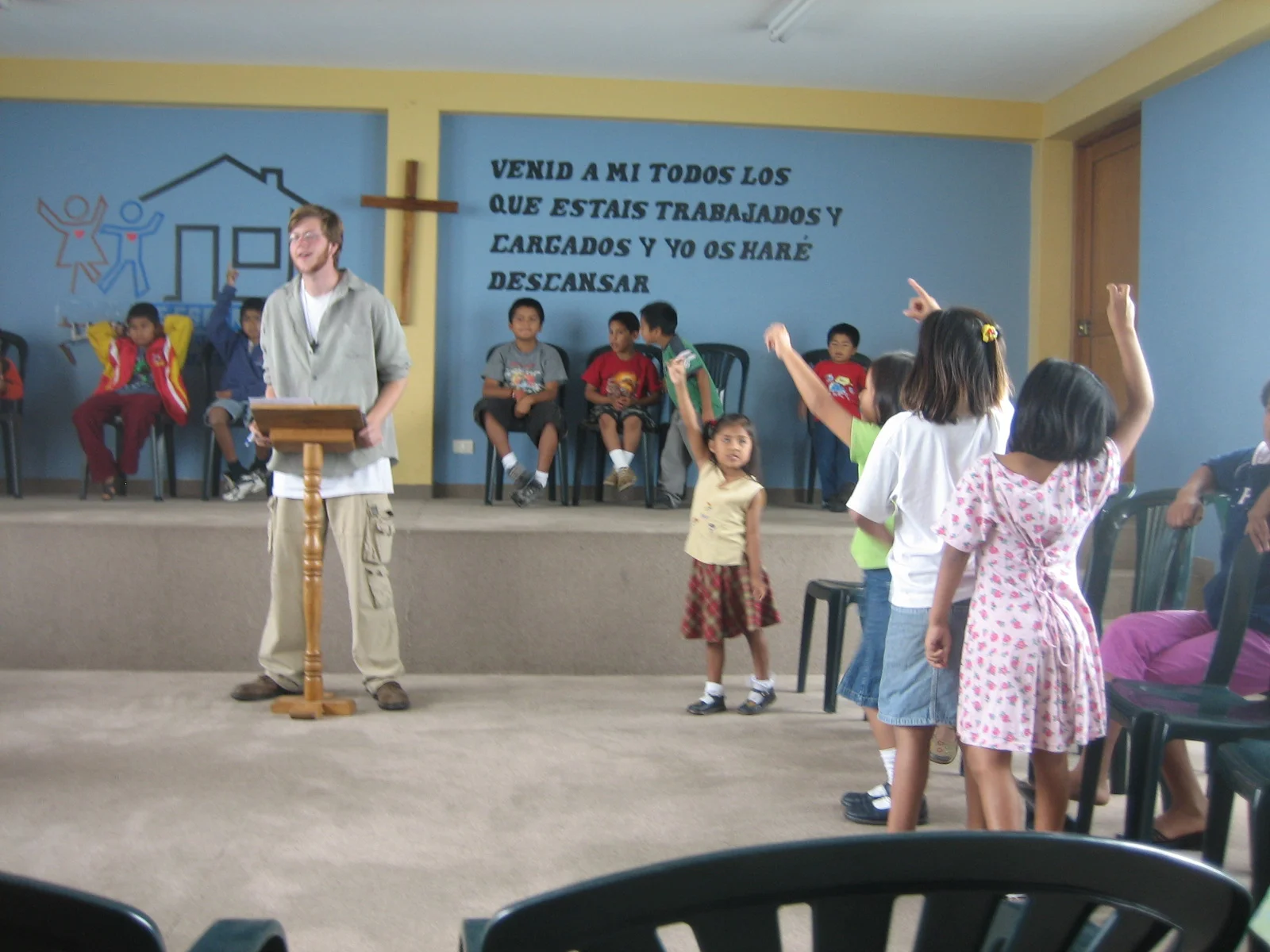
When you hear the words “missions”, what comes to mind?  You might think of very pale Victorian missionaries, lost in the jungles of Africa but faithfully maintaining proper British decorum while being stewed by savages.  Others might think of Mother Theresa, working tirelessly to provide for the basic needs of the poorest of the poor of the world.  And still others might recollect your own strange encounters with men and women with incredible stories and poorly dressed, socially awkward children!

The fact is, for many of us, no matter what our background, we tend to think of missionaries as people who are fundamentally unlike us, and to think of long-term missions as something that other people get involved with.  Although many of us will quickly contribute time and money to advocate or give aid for humanitarian relief, the thought of being personally involved in cross-cultural missions, either as one who sends or as one who goes, can often seem beyond us.  For some, this may be because we do not see a good reason to be involved in missions (I will be writing about the “why” of missions in next month’s Resurrection Times).  But for others, there may be confusion about what “missions” actually is.

The word “mission” literally means “a sending,” and understood in this way, it becomes clear that our God is himself on a mission!  God the Father sent his Son on a mission into a strange world of human creatures, cursed because of sin, and did so to redeem a people from every tribe and tongue and nation. Then, the Father and the Son sent the Spirit into the world to draw sinners to the Father through the Son.  By way of his two missions, the God of the universe has brought us an eternal salvation, and because of these two missions, Jesus now sends out his Church, that is to say, he sends us out, with a Great Commission.

Our Commission to mission is an amazing part of Jesus’ mission from his Father in this world.  After rising from the dead, Jesus tells his disciples, “As the Father has sent me, even so I am sending you,” (John 20:21), and pours out the Holy Spirit on them to empower them for their mission.  In even more detail, in Matthew 28:18-19, he delivers the four parts of what this Great Commission to mission actually entails.  He says:

  1. Go. Jesus really means it! A mission is by definition cross-cultural, just as the church itself is by definition multi-cultural. Jesus offers salvation to everyone, no matter what language, no matter what culture, no matter what sins they might have, and extending this offer to the ends of the earth (Acts 1:8) is our mission! Paul makes it clear that in order for people everywhere to call on the Name of Christ so that they may be saved, someone must be sent to proclaim the Gospel to them (Romans 10:13-15). The true practical upshot of this is that the Church’s ministry must to a significant degree move across cultures if it is to model the ministry that Christ demonstrated to us by coming into our world to save us. This happens through real individuals being sent by a church and going. It is not enough to affect our neighborhoods for Christ: the nations must hear of his Good News, and we must take it to them!

  2. Make disciples of all nations. Showing up in another culture has a definite purpose for a missionary. At the heart of cross-cultural missions is the aim to bring the enemies of the King of the universe into a right relationship with him, to become disciples of his Son Jesus Christ. While being a disciple of Jesus is a lifetime journey, and becoming more like him is a lifetime process, we are made his disciples when we first trust in Jesus Christ alone for the forgiveness of our sins and for eternal life and call upon him as our Lord and as our Savior. As difficult as it may be, cross-cultural missions has at its heart the proclaiming of Jesus’ incarnation, death and resurrection and the calling on men and women everywhere to experience new life in him.

  3. Baptize them in the name of the Father and of the Son and of the Holy Spirit. Not only do missionaries focus on preaching the Gospel cross-culturally, but they also focus on building up the Church cross-culturally through worshipping the Triune God, and in particular by administering Baptism and the Lord Supper. If a missionary teaches a person to know who Christ is and yet allows him to remain cut off from his Body, the Church, he has failed to truly introduce him to Christ. Christ builds up his Church by the power of the Holy Spirit not only through the preaching his Gospel but also through the administering of his Sacraments, and this is just as true in cross-cultural ministry.

  4. Teach them to obey all that I have commanded you. While a missionary should not preach his own life or inculcate those to whom he has come with his own culture, he is to teach all that Christ would have his hearers to know about his Kingdom and about living in the Kingdom. The Apostle Paul, a veteran missionary, says to the elders of Ephesus, “I did not shrink from declaring to you the whole counsel of God,” (Acts 20:27). It is through real people teaching the Word of God effectively in the context of another culture, often in another language, that God molds and fashions the whole life of both the new believer and the mature believer into the image of his Son Jesus and prepares them for the difficulties that they will face in this life being Christ’s disciples. Cross-cultural teaching is not only needed but necessary for Christians in churches everywhere, and it lies at the core of missions as Jesus intended it.

So then, what is “missions”?  “Missions” is the active and joyful obedience of a church to Christ’s four commandments listed above, as the church commissions and supports individuals from within her fellowship to go and cross cultural lines in order to proclaim the Gospel and bring people into a relationship with Christ, to administer the Sacraments, and to build up and shepherd the Church in that culture in all the ways that Christ has commanded until he comes.

In addition, we are used to hearing about medical missions, construction missions, healing missions, and other kinds of welfare-related missions, and all these can be very helpful!  They can function in much the same way that a local church’s diaconal ministry demonstrates the love that God has for the poor and sick and destitute.  However, what lies at the core of missions is taking the Good News of Jesus across the borders of culture to bring forgiveness to the lost, to build up the church, and to bring worship to God where there was none before.

We at Resurrection are a church that is passionate about cross-cultural missions in exactly the way that Jesus commissions us in Matthew 28:18-19.  Now the question is: are you as a follower of Jesus willing to dive deeper into the exciting world of sending missionaries, or maybe even to going as one?

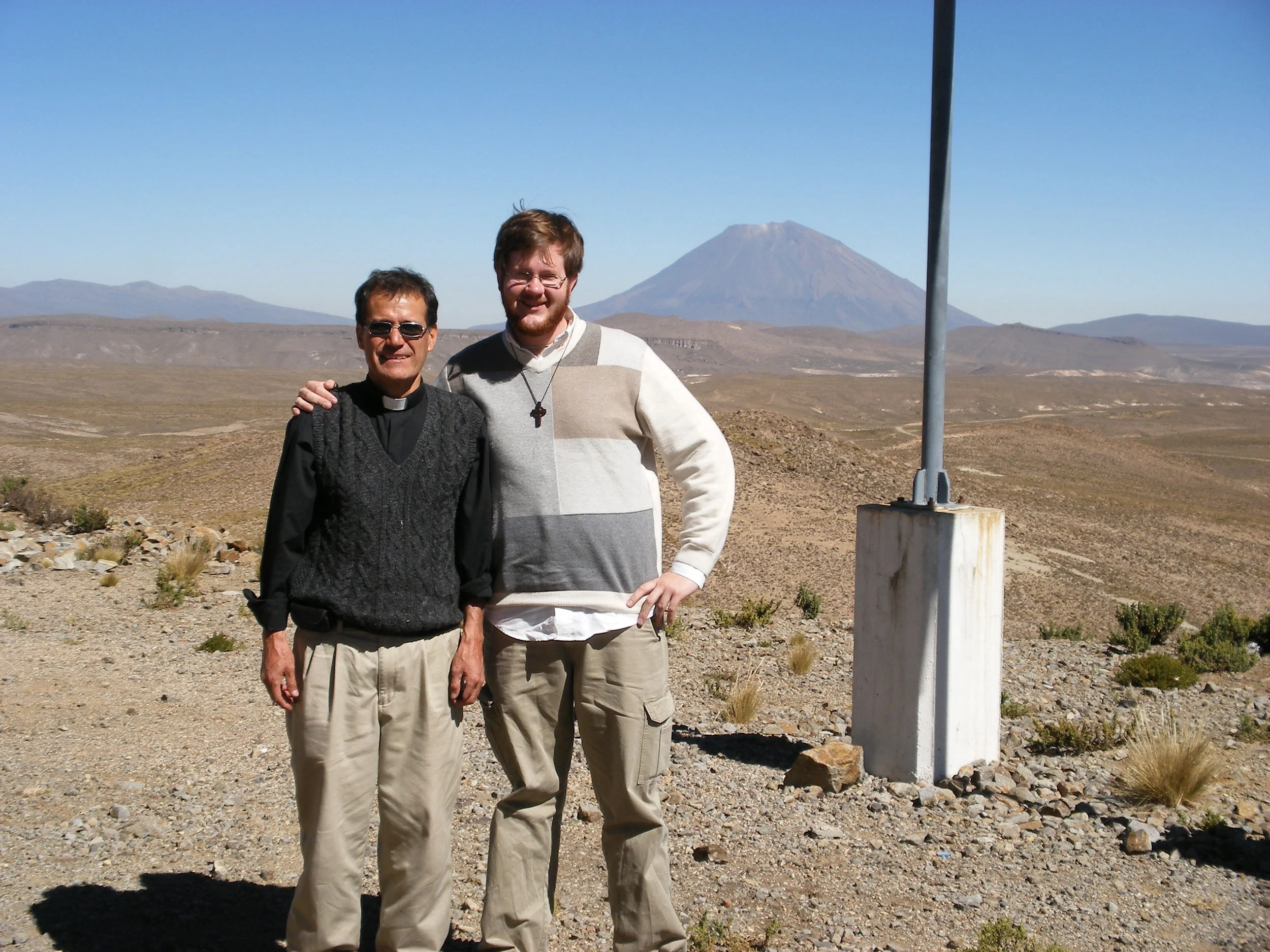
Some activities in life require no explanation as to why we would want to do them.  It’s obvious why someone would want to scarf down a strawberry milkshake from Chick-fil-A®.  It’s obvious why someone would buy flowers for their wife after an argument, or preemptively “just because it’s Tuesday!”  And it’s obvious why someone would roll down the windows in their car and sing at the top of their lungs when “Free Bird” comes on the radio (though playing vigorous “air guitar” is not recommended while driving).

For many of us, however, it is not nearly as obvious why we as a church or as individuals would be involved in cross-cultural missions.  Missions (and sometimes missionaries themselves) run so strongly against the grain of American culture and even of many Christians’ lives that the sheer novelty of cross-cultural ministry can render us bewildered.  Why would anyone give up everything familiar and comfortable and (supposedly) meaningful in life to call people in another culture to repentance for the forgiveness of their sins and a living faith in a crucified God?  And why would we actively send and support the people who head out on these crazy shenanigans?

Perhaps surprisingly to us, it is the Lord Jesus Christ himself who not only outlines what missions is (what we checked out in last month’s edition of the Resurrection Times), but why we are to be involved in missions.  And far from being one of the fringe activities buried in our church budget, the “why” for missions that Jesus gives puts it squarely at the center of who we are as the Church and as Christians.

  1. Because the Father has commissioned us. Jesus roots his command for his disciples to be missionaries in God’s will to save the nations as prophesied in the Old Testament: “Thus it is written, that the Christ would suffer and rise again from the dead on the third day, and that in his name a repentance for the forgiveness of sins would be preached to all the nations. Beginning in Jerusalem, you are witnesses of these things” (Luke 24:46-47). Jesus came into this world to accomplish his Father’s will (known to us in the Old Testament prophecies) through his suffering, death, and resurrection. But Jesus goes and throws missions into the mix! Apparently, preaching the Gospel, repentance, and the forgiveness of sins to all the nations is just as much a fulfillment of Old Testament prophecy and the Father’s will to save sinners as Christ’s death and resurrection! If we have a passion for God’s glory, for his Gospel, and for his purposes in the world, we will have a passion for cross-cultural missions and we will find a way to become involved in them as well.

  2. Because the Son has sent us out in his authority. Jesus also sends his disciples out to be missionaries on the basis of the ultimate authority that has been given to him. “All authority in heaven and upon earth has been give to me. Therefore go …” (Matthew 28:18-19). Missionaries go in the Name and with the authority of Jesus, who has taken his authority over all of creation at the right hand of his Father, and to whom every knee shall bow and whom every tongue will confess to be Lord of all creation. When Jesus sends out missionaries to proclaim the Gospel, nothing can stand in their way, since nothing can stand in his way; in fact, the principal way in which Jesus exercises his authority today is through these missionaries who proclaim his Gospel to sinners! As God sends missionaries and spreads his Gospel through them, Christ “bares his holy arm in the sight of all the nations, and all the ends of the earth shall see the salvation of our God” (Isaiah 52:10). If Jesus is indeed not only Lord of all creation but Lord of our hearts as well, we will have a deep and corresponding passion for cross-cultural missions.

  3. Because the Spirit has been poured out upon us. When the Holy Spirit was poured out on a small group of disciples, it was ultimately to bring all the nations of the world to salvation. The Apostle Peter quotes the Prophet Joel in his Pentecost sermon, that when “I pour out my Spirit on all flesh … it shall come to pass that everyone who calls on the name of the Lord shall be saved” (Acts 2:17, 21). Jesus himself promises his disciples that “you are witnesses of these things, and behold, I am sending you the promise of my Father upon you. But wait in the city until you are clothed with power from on high,” (Luke 24:48), in other words, that “you will receive power when the Holy Spirit has come upon you, and you will be my witnesses … to the ends of the earth,” (Acts 1:8). God not only backed up the missionary witness of his Apostles with “signs and wonders and various miracles and by the gifts of the Holy Spirit distributed according to his will” (Hebrews 2:4), but he empowered and continues to empower his Church with the Holy Spirit to bring the light of the Gospel to all the ends of the earth. If we are truly filled with the Spirit of Christ who leads us into the truth, we will have a lasting passion to bring the Gospel to all peoples through cross-cultural missions.

  4. Because Christ will return to us soon. Jesus has promised that the time for sinners to be saved will come to an end when he returns at the end of the age, and that he is coming quickly (Revelation 22:20). While Jesus reminds his disciples that “it is not for you to know the times and periods which my Father has established by his own authority” (Acts 1:7), he also predicts that “this Gospel of the Kingdom will be preached in the whole universe as a witness to all the nations, and then the end will come,” (Matthew 24:14). Until that happens, Christ promises that, “I am with you all the days until the end of the age,” (Matthew 28:20), a foretaste of his full presence with us forever. If we, together with the Spirit and the Bride, cry out with longing, “Come, Lord Jesus!” (Revelation 22:20) then the passion of our hearts until then will be to demonstrate his presence with us by making sure that the Gospel is going out to all the nations through cross-cultural missions.

So why get involved with missions, when it seems so radical and even crazy?  Why give up so much, maybe even everything, simply to bring a message to people very different from us?  Why learn new languages, why be separated from family and friends, why live in poverty and discomfort, why become exposed to disease, persecution, and often even death?  The reason is because the God who has so passionately and ferociously loved wretched sinners like you and me, who gave everything to save us by giving up his only Son as the great missionary to our bizarre world of rebels, this Triune God has passionately made every single Christian a partner in this mission.  His passion for his glory becomes our passion for his glory, his love for sinners become our love for sinners, and his boldness in going becomes our boldness in going.  There is no greater mission, no greater vocation, no greater occupation, than to be a part of God’s mission to bring the nations of the world to salvation in the name of Jesus.

Maybe the question is, if all of this is true, why wouldn’t we want to be involved in missions?  As Jim Elliot, a missionary to Ecuador and martyr for the faith, once wrote, “He is no fool who gives up what he cannot keep to gain what he cannot lose.”  When we devote our time, possessions, or abilities to the work of missions, either as someone who sends and supports missionaries or as someone who goes as a missionary, we become a part of God’s great mission to a world which needs to hear anew or for the first time of his great love for us in Jesus Christ.

This is why we at Resurrection are so committed about cross-cultural missions: because it not so much our mission for God, but God’s mission into which he has enthusiastically drawn us.  And this brings us in the end to that most personal question: are you willing to respond to God’s call to be drawn into his mission, either by sending a missionary or by going as one?

Growing up, my musical education was of the Traditional sort.  Studying first the piano and then also the violin, my teachers coached meticulously for hundreds, even thousands of hours of instruction and meticulous drilling, and I became well versed in reading the most complex sheet music, in executing the fastest and most difficult licks, and in unleashing my emotions through the music with power and grace.  Yet, as I gradually came to realize that I lacked on thing: I was unable to improvise.

Early in high school, I began to become exposed to early jazz-style piano, played by guys with ridiculous names like Jelly Roll Morton, Fats Waller, Pinetop Smith, and the like.  As I hunted for sheet music to begin playing their stuff, I ran up against a wall: it didn’t exist!  These crazy guys would improvise effortlessly, making it up as they went along.  But when I tried my hand at it, I came up with a big fat nothing.  It was so different from anything else I had done up until that point, that I would just sit and stare at the keys with a blank expression of bewilderment.  It’s not that I just didn’t know how to improve in playing jazz or rock piano: I didn’t know how to start or even where to begin!

This is pretty much how you or I can often feel about getting involved with global missions.  If you’ve been reading for the last couple of months, we have investigated what missions is (May) and why we need to be involved in missions (June).  But even if we know what cross-cultural missions is and why we should be involved in it, this doesn’t mean that we have a clue how to become a part of God’s work of missions in the world today.  But, if you find yourself in this position, take heart!  The purpose of this article is to illustrate some ways in which all Christians can become involved in global missions.

We get an excellent example of the two primary ways to be involved in missions in Acts 13:1-3.  It reads, “Now there were in the church at Antioch prophets and teachers, Barnabas, Simeon who was called Niger, Lucius of Cyrene, Manaen a member of the court of Herod the tetrarch, and Saul. While they were worshiping the Lord and fasting, the Holy Spirit said, ‘Set apart for me Barnabas and Saul for the work to which I have called them.’ Then after fasting and praying they laid their hands on them and sent them off.”

The two primary ways in which you and I can be involved in missions are to be either one who goes (a “Missionary”), or one who sends (a “Sender”).  A missionary and a sender may be involved in two very distinct parts of global missions, but they are really two equally essential members of the same team which is bringing the Good News of Jesus Christ to all peoples, tribes, languages, and nations.

How do you become a missionary then?  As we see from this passage in Acts, just as missions itself begins with God (the whole thing kicks off as the church is praying), missionaries become missionaries because God calls them to be missionaries (it is the Holy Spirit who chooses Paul and Barnabas to be missionaries).  While many missionaries can become what we might call “career missionaries”, that is, they might serve as missionaries for long periods of time or even their whole adult lives, all missionaries are sent out for a purpose, as the Holy Spirit says, “for the work to which I have called them.”  When God calls someone to be his missionary, this call may begin as a general sense of desire to serve cross-culturally on a short-term mission trip or as a long-term missionary, but eventually it must become concrete and take on shape as a definite work that God has entrusted to the missionary or team of missionaries.

However, it can be genuinely difficult to distinguish between God’s call to do something and our own (perhaps selfish or sinful) desires to do the same thing.  How can we know whether God has called us to be a missionary or not?  Well, the truth is, God has not left us in the lurch: he confirms his inward call to missionaries with the outward call of being sent by his church.  When God’s church discerns that a person or team is called to become a missionary, and makes it a priority to send that them, God confirms to the missionary and to the church that it is in fact his will that this person or team go on the mission field.

Senders then are not optional: they are essential to God’s work of missions.  Paul makes this clear in Romans 10: 14-15, “How then will they call on him in whom they have not believed? And how are they to believe in him of whom they have never heard? And how are they to hear without someone preaching? And how are they to preach unless they are sent? As it is written, ‘How beautiful are the feet of those who preach the good news!’” Paul says that those who share the Gospel, especially cross-culturally, have to be sent by the church, both as an institution and as an organism, so that the whole people of God can be involved in his plan to bring salvation to the nations.  This is why the Holy Spirit tells the church to set aside Paul and Barnabas for missions, and it is the church that lays hands on them to send them out for the work appointed for them by the God who saves.

If God is calling you to be a sender (and make no mistake: as a Christian, he is calling you to be either a missionary or a sender), there are several concrete ways for you to begin sending missionaries:

  1. Identifying missionaries. The church needs to be on the lookout for people who are called to missions! Some people who are called to missions often do not realize it until a sender calls them aside and points out that they are being called to missions. Once called, they need to be trained, supported, and received back again into the church.

  2. Financial support. It may seem like missionaries are always asking for money, but seeking financial support from senders accomplishes two things. First, it allows Christians to become a part of what God is doing abroad; as Paul speaks of his own need in Philippians 4:10, “You were indeed concerned for me, but you had no opportunity.” Second, it is the primary way in which God meets the needs of the missionaries and their families as they serve in sharing the Gospel cross-culturally.

  3. Prayer support. Missions work is war. It is a war not against flesh and blood, but against the spiritual forces of evil for the hearts and minds of the people whom God loves. Missionaries face incredible struggles on the field, and just as a tree will be blown over by the wind without an extensive network of roots, missionaries desperately need the prayers of hundreds if not thousands of Christians to be about the work that God has called them to do. This is God’s work, and so we have to be asking him for his help always.

  4. Advocacy. Missionaries often need help raising awareness for their missions, and they often need help making connections, communicating with potential senders, and finding accommodations as they beat the bushes for financial and prayer support. You can help to send missionaries by being a point of contact for them with others and by exercising hospitality when it is needed.

  5. Moral support. Missionary work can be difficult, lonely, and discouraging. There is almost nothing better for a missionary than to receive letters, emails, phone calls, care packages, and the like from their friends and loved ones, and even from strangers, back home in the United States. It helps them remember that they are part of a broad team of brothers and sisters in Christ who are committed to the same work to which they are, who confess the same Gospel that they do, and who have the same Lord that they have.

To finish the story of my musical training, in the end I did learn how to play jazz and to improvise like I had always wanted.  But while my studies did come in handy, I really picked up the art of improvisation one day when I was playing with a small combo of musicians when, with much fear and trepidation, I just jumped into it!  I let my inhibitions go and just started playing what came to mind.  In other words, it was through doing it that I learned how to do it.

At the end of the day, these are just a few suggestions regarding the how of getting involved with missions.  But, much like my experience with jazz, to know how best to get involved in it, either as a missionary or as a sender, you need to jump in, get your feet wet, get your hands dirty, and experience the marvelous work that God to which is calling you! 

As I have begun the process of seeking financial and prayer support for my being a long-term missionary to Buenos Aires, there are certain questions that continually seem to pop up.  Some are human interest questions, like “What’s the food like?” “Are the girls pretty?” or “Is it safe for Americans?” But one of the questions that I often get from thoughtful people all over the place is, “Why do we need to send missionaries to Argentina?”  I’ve gotten this question from pastors and laymen, from college professors and from middle scholars (not to mention from former girlfriends), and it is a question that really needs answering.  In the last few editions of the Resurrection Times, we have answered the questions of the “What?” (May),  “Why?” (June), and “How?” (July) of cross-cultural missions; now, in this article, I want to address why sending missionaries to Argentina is a productive ministry.

Common Objections to Missions in Argentina

There are usually several objections to other countries sending missionaries to Argentina.  The first objection is that Argentina, many say, is a “Christian nation.”  The assumption here is that since the majority of the country identifies itself as Roman Catholic, and because Protestant churches have been recognized and tolerated for over a century, that the Gospel has come to Argentina already and we don’t need to send missionaries there.  The second objection is that Argentina is a “modern society.”  The assumption here is that since the country as a whole has been industrialized, modernized, and secularized, that the goal of missions (societal progress) has been accomplished, and so missionary activity should be directed more toward “underdeveloped” cultures or countries.  But both of these objections to cross-cultural missions in Argentina indicate a critical misunderstanding of missionary work in general and of the situation on the ground in Argentina.

First, although the Gospel may have in the past come to a people, culture or nation, this fact alone does not mean that God will not call a missionary to preach the Gospel afresh to them.  For example, we are currently seeing God calling missionaries from Africa, Asia, and South America to come to the United States as missionaries!!   The reason for this is that cross-cultural evangelism and ministry demonstrate the very character of God’s own passion to cross boundaries to share his love, just as he did in his Son Jesus Christ.  The call of God to a missionary is to preach the Gospel to whomever he puts in the missionary’s path, whether it is the first time that people in that culture have heard the Gospel or whether it is the hundredth time, and to build up the Church of God in that place, whether the Church has been there for six months or for six hundred years.

We see this approach in the life of missionary extraordinaire and life-long letter writer, St. Paul of Tarsus: Paul went and ministered to wherever the Holy Spirit called him.  The Apostle Paul and his motley crew did indeed prefer to preach the Gospel to cities where they were the first to share the Gospel, such as Philippi, Thessalonica, Berea, Athens, and Corinth.  He writes as much to the Romans “I make it my ambition to preach the gospel, not where Christ has already been named, lest I build on someone else’s foundation,” (Romans 15:20).  However, Paul also often spent many years ministering as a missionary in cities where the Gospel had already come.  He spent years ministering in Ephesus even though the Gospel had come already through Apollos, Priscilla, and Aquila (Acts 19).  In the same way, Paul made it his goal to come to the church in Rome and minister among them, and did so for over two years, even if it came about through his imprisonment (Acts 28).  Paul’s ministry in those cities was no less important than in the cities to which he was the first to arrive with the Gospel, and that ministry bore enormous fruit.

Second, although missionary activity often brings technological, societal, and economic development (this is often called “redemption lift”), it is not the primary goal of missions or of missionaries.  The “Scottish model” of missions, for instance, tends to plant every church with an accompanying grade school and clinic on the same block, beautifully illustrating that the same missionaries, ministers, and laymen who care for the spiritual needs of their community also care for the community’s physical needs.  However, it would be a mistake to say that when the mouths have been fed, when the bodies have been clothed, when the sick have been healed, when the democratic elections have been implemented, and when the broadband internet connections have been installed, that the work of missions is completed.  On the contrary, a culture may inherit all the comforts of modernization and still not have received the love and salvation of God through faith in his Son Jesus Christ.  They may have gained this world, but they can still lose the world to come.

Oddly enough, given our usual expectations for missionaries, the Apostle Paul’s ministry as we see it in the New Testament did not target the poorest or “least developed” areas in the ancient Mediterranean world.  Paul didn’t go to the interior of Turkey or Greece (horrendously impoverished areas), and he didn’t go to Scythia (where their barbarian customs brought shivers to polite Greco-Roman types).  Instead, Paul went where the Holy Spirit called and led him, and the Holy Spirit took him and his posse to the posh cultural centres of the Aegean Sea.  Paul spent most of his time preaching the Gospel to military retirement communities, to philosophical societies, to silversmiths and purple cloth tradesmen, and even to the hedonistic Las Vegas of his day (“what happens in Corinth, stays in Corinth”).  In fact, the primary region that was sending missionaries to the rest of the world was Palestine, an area so poor that Paul actually raised funds for the missionary senders rather than the other way around!

So, despite our common stereotypes of missionaries, when we see the Holy Spirit calling people to be cross-cultural missionaries in areas like Argentina, Canada, Europe, or even the United States, we shouldn’t even blink an eye: God has been doing these sorts of things for a long time now!  However, it is still important to ask how best missionaries can be of service in bringing the Gospel to the people of Argentina and in building up the Church of Jesus Christ in that area.

The Need on the Ground for Missions in Argentina

Argentina, despite appearances, is far from being a “Christian nation.”  Though most (over 90%) would call themselves Roman Catholic, less than 20% of them are actually practicing, and even fewer would say their faith plays any part of their normal lives.  Part of the reason for this is that the Roman Catholicism institutionalized in Argentina presents a gospel which mixes grace with works, which exchanges faith in the Church for faith in Christ, and which takes a casual attitude toward the sin both of individuals and of institutions.  In the process, the Roman Catholic Church has faded into the background of Argentine culture as a traditional but largely irrelevant component of the needless religious part of modern life.

Indeed, Argentine society has borrowed much of the secularism that has plagued Europe over the last two centuries.  Argentina as a whole truly bought into the promise of the Enlightenment: that if everyone will put their hope and trust in the progress of science, democracy, and economic liberty, that glorious prosperity and happiness would follow in the wake of this progress.  But after a century of political dictators, failed military endeavors, and economic collapse (most recently in 2003), this promise has rung hollow, and the general feeling among the people of Argentina is a sense of bitterness and betrayal.  The only answer to the despair and frustration that the people of Argentina have come to feel is the Good News of Jesus Christ, the only message that can offer lasting and ultimate hope.

Yet the Protestant and evangelical churches which should have been most ready to present this Good News to Argentina have suffered from two obstacles.  The first obstacle is insulation: Protestant churches were only allowed to minister to certain ethnic groups (British, German, Dutch, Scandinavian, etc.), and until this past century were forbidden from evangelizing the native Roman Catholic population.  Yet, after the ban was lifted, these churches were largely unable to break out of being mere cultural heritage centers for certain ethnic groups.

Recently, however, Anglican churches and others like them have begun to reach out with the Gospel to the culture around them, and to do so passionately.  However, the second obstacle in their presenting the Gospel is now a lack of workers.  Because these churches waited so long to bring the Gospel to the society around them, they tend to be small and few, and there are few ordained ministers or lay leaders who can proclaim this Gospel with the effectiveness that it deserves.  There are approximately two Anglican congregations in Argentina for every ordained Anglican minister.  What’s more, there is no Anglican seminary that can prepare and train up new ministers (candidates are currently attending the Baptist seminary), and there are few funds that can pay for their studies or pay their salaries as ministers upon graduation.

It is perhaps here that missionaries in Argentina can be most effective.  By serving as ministers, pastors, evangelists, church planters, and seminary professors in Buenos Aires and other areas in Argentina where there are so few leaders, missionaries can not only labor in the vineyard of the Lord by proclaiming the Gospel themselves but also by building up and mobilizing the whole Church there to testify to the grace of God offered to them in Jesus Christ.  In this way, the Gospel can be declared, the Church can be strengthened, and the God who calls us know him and to have a relationship with him can give his Son the prize for which he died: a Bride made up of those who worship his Father in Spirit and in Truth.

Does Argentina need missionaries?  At the end of the day, we can give plenty of reasons why Argentina is worthy of the attention and efforts of American men and women dedicated to the Gospel of Jesus Christ and who desire to minister there, but I believe it is God who truly needs to answer the question.  If the Lord is calling people to serve as missionaries in Argentina, he has his reasons, he has his plan, and he has his means: and the result is going to be incredible!

I mostly grew up in the Christian and Missionary Alliance, a Christian denomination which, in the light of the imminent return of our Lord Jesus Christ, strongly emphasizes cross-cultural missions. This wasn’t just rhetoric: every year our little Midwestern church had oodles of missionaries come to visit from faraway places like Ghana, Irian Jaya, Chile, Liberia, and so many others. They blanketed our tight-knit community with amazing stories of what God was doing around the world and, by extension, what he was capable of doing among us. It was an amazing church for me to spend my formative years in the faith!

As I prepare to head out on the mission field, the memory of these incredible men and women has forced me to put a very serious question to myself: “Why do I think that I am called to serve God abroad in missions, especially in Argentina?” After all, every Christian is called to be involved in cross-cultural missions, but not every Christian is called to go as a missionary: how do I know that I’m the one called to go? I wrestled with this question for a long time before coming to an answer that, I believe, honors the zeal of Almighty God, and it’s important that people interested in partnering with me in this mission ask this question.

Over the last few months in the Resurrection Times, we have taken a look at various questions related to missions: we looked in May at what missions is, in June at why we are to be involved in missions, in July at how we can be involved in missions, and in August at why missionaries are needed in Argentina. The purpose of this article is to answer the question put forward above: why is God calling me to missions in Argentina? Due to the fact that God’s calling comes in the course of living life, my answer to this question involves telling the story of large sections of my own life. I will therefore be moving autobiographically, telling first how God called me to missions generally, and then second how God called me to missions in Argentina in particular.

As a kid growing up in the Midwest, the last thing that I wanted to be when I grew up was a missionary. Even though I grew up in a church that emphasized cross-cultural missions in a big way, I had little desire to forsake comfortable living in the United States to live abroad, or to forsake my own dreams and passions to follow the unknown path that the Lord might have for me. At the root of my concerns was not really a distrust of missions, but a genuine distrust of God himself and his loving will for my life.

However, in the providence of God this changed dramatically when I was fourteen years old. Barry Jordan, a missionary serving in Indonesia came and spoke to our youth group and left me with a simple but powerful message: the safest place that we can be is in the center of God’s will. In other words, as we serve God how and where he calls and trust his fatherly love and sovereign will for our lives, our path is not only good but is better than anything else that we could come up with for ourselves. He is our Creator and Savior, and whether he calls us to serve him in San Diego or in Timbuktu, whether we are in plenty or in want, whether life is pleasure or life is suffering, we find true peace in trusting him and find joy in serving him. It was at that time that God began gently calling me to ministry and to missions.

Still, God’s calling at that point in my life was rather general and vague: I longed to serve him in wherever vocation to which he might call me, but I was unsure about the details. For this reason, when it came time to head to university I chose to major in Mechanical Engineering with an eye towards serving God with a Christian foreign relief and humanitarian organization. But then midway through my undergraduate studies the Lord began to make it clear that I was called to serve him specifically as an ordained minister of the Gospel of Jesus Christ, whether in the United States or abroad, and I began planning on heading to seminary soon after graduating.

I didn’t actually head directly to seminary after graduating though. Instead, it became apparent that it would be wise to spend time serving God in concrete ways before diving into graduate school, and this promised to provide an ideal opportunity for me to put a call to cross-cultural ministry to the test. Consequently, I relocated for a year to Trujillo, a large city smack on the coast of Peru, and served 24/7 as a volunteer in a Christian orphanage. This proved to be the hardest thing that I have ever done in my life, and there were whole months where I swore I would never go anywhere else as a missionary ever again. But these frustrations passed as I came to a deeper knowledge and love of the Lord, and by the end of my year in Trujillo I knew that the Lord was calling me to missions, and most likely to missions in South America. Though I left Peru to attend seminary in the United States with sorrow at leaving the mission field, I left with the purpose of returning as a minister of the Gospel and missionary to South America.

This direction and intentionality towards missions permeated both my education at Westminster Seminary California and the beginning of my ministry at the Anglican Church of the Resurrection. During seminary I returned twice to South America to serve as an intern at Anglican churches, first in Peru and then in Buenos Aires, Argentina. I spent most of my time during that second internship in Argentina stubbornly insisting to myself that the Lord was calling me to missions in Peru; after all, I had spent so much time there and had acquired a deep love for its people and culture. But by the end of my time in Buenos Aires, I had become deeply convicted that God was calling me next to serve him in missions specifically in Argentina.

I was not alone in perceiving this call from God. Over the course of the following year the Anglican bishop and clergy of Buenos Aires recognized God’s call and extended an invitation for me to serve in ministry among them. Similarly, the leadership of my own church in the United States recognized the same call from the Lord and committed itself to train and to prepare me to minister in Argentina. What’s more, the following year the Society of Anglican Missionaries and Senders (SAMS) also recognized the Lord’s call upon my life and accepted me as a missionary candidate and member of their Society. In light of the convergence of my own inward sense of the Lord’s call and the clear outward call of God through church leaders around the world, I have gratefully committed myself to pursue service as a missionary in Argentina.

It has been amazing to see God has confirmed his call in his perfect timing, and it has been my joy to place my “Amen” on his will for where and how I am to serve him. His purposes and his plans will last forever, and I am deeply thankful to be a part of his work in reconciling the world to himself in Christ. I encourage you, if you have never done so, prayerfully both to consider how the Lord may be calling you in your own life to serve him and also to discern whether he would have you partner with me in this mission in Argentina to which he has called me!

One of the most amazing things about love is that it is always concrete. It is just as impossible to love someone abstractly or theoretically as it is to love no one in particular. When one person loves another, love flows out in concrete actions during the course of living life, from a small thoughtful gift to a standard-issue bear hug, from a shared bowl of movie popcorn to decades of daily deference and sacrifice. It is, I think, a part of being human: we desire others to express their love to us in these sorts of ways, and we too desire to express love in these ways as well.

God himself is the author of love in all of its concrete glory; in fact, the love of God is never merely general or generic. The Apostle John writes, “In this the love of God was made manifest among us, that God sent his only Son into the world, so that we might live through him” (1 John 4:9). The most concrete act of love in the history of the universe involved the Father sending his Son into the world on a mission: to give his life in love for the life of a world that did not love him. John continues, “In this is love, not that we have loved God but that he loved us and sent his Son to be the propitiation for our sins. Beloved, if God so loved us, we also ought to love one another” (4:10-11). God’s love came far before we loved him, and now he calls us to love in concrete ways that mirror his own. And this means, among so many other things, developing a passion for becoming involved in the same mission that he inaugurated in sending his Son Jesus to be our Savior.

In the last few months we have looked at all sorts of topics related to global cross-cultural missions. Back in May, June and July, we covered the “What?” “Why?” and “How?” of missions as we know it in the church today. Then in August we looked at why Argentina itself needs missionaries, followed up in October with a look at why David is headed to Argentina as a missionary. After these articles then, the question remains: how can I become a part of God’s concrete plan of love around the world? In other words, how can I become a part of cross-cultural missions and ministry in a place like Argentina? The answer has very much to do with showing love concretely to people around the world through the missionary work of others. 

Being involved in missions almost always means being involved as a partner in the actual ministry of actual missionaries. If God has given you a passion for the Gospel to go forth around the world, a passion to see the church built up around the world, and a passion to see God’s name glorified around the world, then connect with the ministry of a cross-cultural missionary! And fortunately for everyone who is reading this, you know someone who is planning on serving as a missionary in Argentina and who urgently needs partners in his ministry: the Rev. David Alenskis.

Now, at this point I would to clear my throat and say that I am naturally reluctant to write articles that are self-promoting. It is better, as Jesus points out in his parable, to be called from the foot of the table to sit at the head by another. But the truth of the matter is that I am not here writing to promote myself: I am promoting God’s work. I am not asking for people to support me, I am asking for people to support God’s mission work in Argentina. And so, on behalf of myself I must be timid, but on behalf of God’s purposes I will be bold! I say this because this mission needs your support, and I urge you to give yourself to it as God leads you. Here are a few concrete ways in which you can mirror God’s love by becoming a part of this mission:

  1. Learn More. Get to know the, need, goals, plan, and people of the mission. You can learn more about these and so much more by logging on to the mission’s website, or even better, by sitting down with me over coffee or having me over for dinner. I love to share about what God is doing for his glory around the world!

  2. Pledge to Give. The budget of my mission is structured around the gifts of people who have pledged to give every month to the work of this ministry. I spoke this past week with my boss at my missions organization who informed me that I am still short by one full third in the amount of pledges of monthly support that I need to be able to head on the mission field. Even a pledge of $25/month will make a huge contribution to sending me to the mission field in Argentina. Please consider making a pledge: I will not be able to go without them!

  3. Commit to Pray. As important as financial gifts are to the mission, the regular prayers offered by God’s people are even more important to the success of God’s mission in Argentina. I plead with you to get in touch with me in person or through the website and commit to pray regularly for the mission and those connected with it.

  4. Receive the Updates. The more that you can stay current with the mission, the more faith you will have in God’s power and goodness, the more passion you will have for world missions, and the more involvement you will have in the mission itself. Let me know through the website or in person if you would like to receive weekly, monthly, and/or quarterly updates about the mission!

  5. Stay in Touch. A final way that you can be involved in this mission to Argentina is correspondence! Let me know what is going on with you and your life through emails, phone calls, letters, and care packages, and help encourage me and those whom I serve with your words and actions. It may even mean a trip to come see firsthand what God is up to among the people that I serve!

Each of these is a concrete expression of a commitment and passion to God’s concrete love and purpose in sending missionaries into the world to bring glory to his name and salvation to the ends of the earth. I urge you to prayerfully consider whether God is calling you to become a financial and a prayer partner in his work in Argentina through this mission, and to come talk to me if you are at all interested in mirroring the love of God in this kind of powerful way!

\