Our goal is strong local churches

From 2012 to 2021 we ministered with several dynamic Anglican congregations in Belize’s western region: the Cayo District.


St. Andrew’s was the largest congregation that we worked with, a parish church in the Anglican Diocese of Belize. Coordinating with a growing team of lay leaders, our ministry at St. Andrew’s was focused on preaching and teaching, leading worship and music ministry, pastoral visitation and leadership development, and outreach both to the homeless community and to the local primary school.

Although the parish is over one hundred years old, its size and influence has greatly fluctuated, often waning in the long periods without any resident clergy. Building on the the ministry of our predecessors the Rev. Juan and Maria Marentes, the Lord used our presence at St. Andrew’s to continue to grow the church, not only in attendance and leadership, but also to become a launchpad for new church plants and other ministries in the area.


St. Hilda’s mission

St. Hilda’s is a strategic mission at a literal crossroads in Western Belize, located in a small rural village called Georgeville. Historically a place of powerful worship and service, it is surrounded by a number of ethnically diverse villages and communities with the potential to become a hub of ministry in the area. Due to its smaller size we often struggled to train and retain new leaders; nevertheless, we worked with a strong group of core leadership to minister to the many children who attend the church on Sundays (and sometimes on weekdays) and to extend those relationships to their broader families.

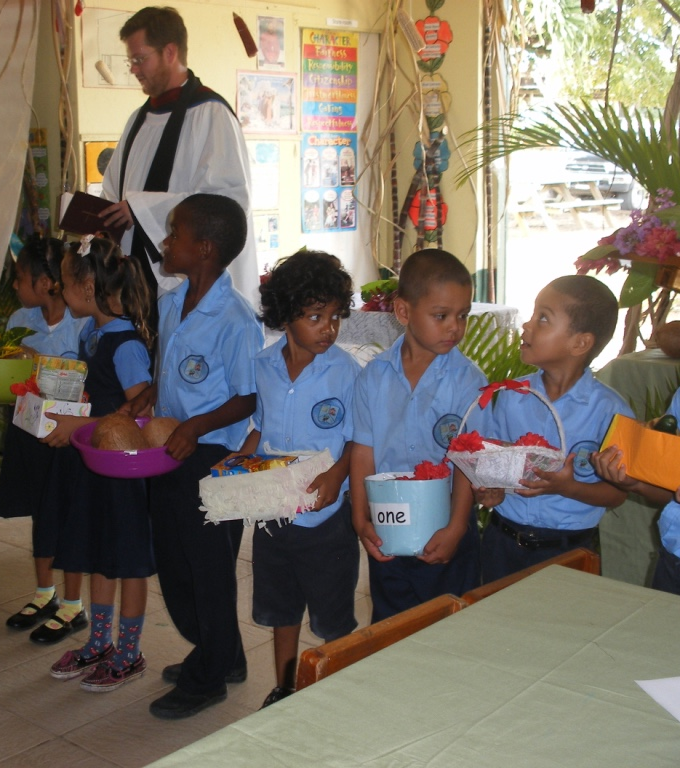
Much of our outreach through St. Hilda’s involved the two primary schools associated with the mission, St. Hilda’s (on the same campus) and St. Barnabas’ (a mile down the road). With effective collaboration, the mission and its schools reached out in new ways to new groups of people: not only to the Kriol who first settled Georgeville, but to the Garinagu, to Hispanics and Latinos, and even to the Maya who live further down the road into the jungle. The Lord used our presence at St. Hilda’s to catalyze a movement to bring Christ’s love to this whole area and to begin new churches devoted to proclaiming the Lord Jesus Christ!


THE HISPANIC MISSIONS

Since the 1970s, political unrest and civil war in Guatemala, El Salvador, Honduras, and Nicaragua have driven tens of thousands of Central American refugees to find a new home in Belize, often founding entirely new villages in the process. It was key then that the 1990s saw the birth of an Anglican outreach to these Spanish-speaking people, outreach which not only involved restorative justice for families wounded by war, but also the planting of self-governing churches in their new communities.

Today three of these missions continue on: Iglesia Anglicana Santa Trinidad (Frank’s Eddy Village), Iglesia Anglicana Santa Cruz (Selena Village), and Iglesia Anglicana la Anunciación (Santa Elena Town). Though poor in financial resources, they are rich in so many other ways. Because of their proximity to our English-speaking congregations, and the overlap in our mutual ministry, we very frequently worked together to further the Gospel and to build up the church of Christ. Together, we were able to share in worship, share in projects and resources, and to be voices for one another in our respective communities, and especially on a diocesan level where few clergy or lay leaders are fully bilingual.

We thank God that he weaved our English- and Spanish-speaking churches in Cayo closer together in unity and ministry, a testimony that the risen Christ is greater than the divisions of ethnicity, language, class, or politics!

Three schools were our biggest mission field in Belize!

Over 60% of Belizeans are under the age of 25, and more than ever young people in Belize are under-churched at precisely the same time that they are being exposed to violence, sexuality, and the indifference of consumerism like never before.

We came to Belize eager to reach these young people and their families with the love of Jesus Christ and the power of his resurrection! Allow us to take a minute and tell you a little more about the primary schools that we served in Western Belize from 2012 to 2021.


St. Andrew’s School

St. Andrew’s is the largest school that we worked with, with over 400 students in attendance. Located in town less than a half mile from St. Andrew’s Parish, the school routinely receives some of the highest academic scores in all of Belize. As a result, enrollment is highly competitive, and the school has been pushed to its physical limits in order to accommodate as many students as possible.

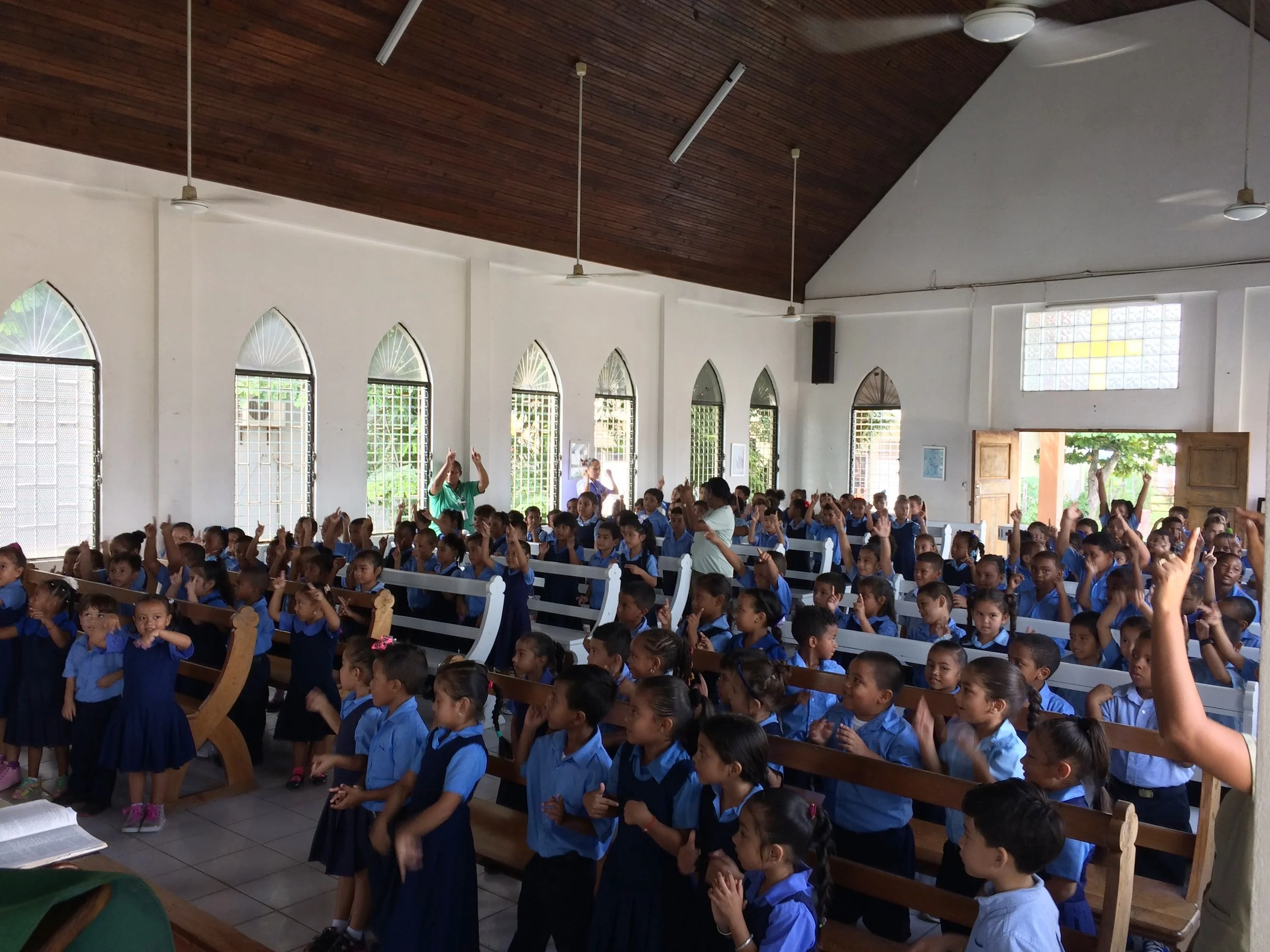
Working with a gifted team of lay leaders, our outreach to the school was predominantly that of providing chaplain support to the staff and students, and their families. We led chapel services with the students (broken into three groups) every two weeks, and through song, prayer, and the Word of God we saw children come to faith in Christ and grow in their relationship with God. We also attended devotions with the staff, counseled students when needed, and visited their families when as often as possible – especially in the crisis situations that inevitably arise.

As the relationship between the school and the church evolved, the Lord used our ministry among the families associated with the school to open further doors for relationship, discipleship, and the building up of his kingdom.


ST. BARNABAS’ SCHOOL

St. Barnabas’ is a historic primary school embedded in the heart of Belize’s agricultural research center. Since colonial times, Central Farm has coordinated the nation’s direction for farming and fishing, and to this day not only is the Ministry of Agriculture’s Research and Development arm located here, but the community hosts the University of Belize’s School of Agriculture, the private Galen University, the Belize Agricultural Health Authority, Taiwan’s ICDF Aquaculture Project, and even a military base for the Belize Defence Force. St. Barnabas’ is an essential part of this ecosystem of activity, and since it moved to its current location in 1950 has been beloved by all, and especially by the families of its students.

St. Barnabas’ is the smallest of the schools at which we served (not quite 100 students), with the fewest number of Anglican students and the highest number of Anglican teachers. Like St. Andrew’s and St. Hilda’s schools, we worked hard to lead chapel services for the students and devotions for the teachers. However, in addition David became much more involved by assisting the school’s administration in leadership as acting Local Manager, giving direction at certain points of critical transition.


ST. HILDA’S SCHOOL

St. Hilda’s is a booming primary school located in the crossroads community of Georgeville. Sharing a campus with St. Hilda’s mission, the school has almost 200 students enrolled, mostly from the village. Though the children who attend St. Hilda’s are predominantly poor, make no mistake: they are very intelligent! As its leadership team has strengthened over the last few years, St. Hilda’s test scores have also risen, and the school has begun to attract students not only from the surrounding villages of Three Mile, Unitedville, and Blackman Eddy, but also from the town of San Ignacio.

Our ministry at St. Hilda’s looked very much like that at St. Andrew’s and St. Barnabas’: chapel services with the students (broken into two or three divisions) and devotions with the staff every two weeks. However, because of the close ties between school, church, and village, we worked together closely with other local leaders to visit families, counsel children, and reach those who need the help that our presence can afford.

 
\